Kolekcionar vatrogasnog znakovlja
DAMIR MARENIĆ


DAN KRALJE. VAT.GLAZBE

Kraljevački vatrogasci u svom radu tradicionalno veliku pažnju poklanjaju i kulturno-umjetničkom radu. Tako je još daleke 1931. godine formirana jedna grupa muzičara sa puhačkim instrumentima koja je sa Sokolskim orkestrom u Kraljevu predstavljali prvi organizirani muzički orkestar. Vremenom je tom sastavu pristupilo nekoliko muzičara vojnika koji su u Kraljevu služili svoj kadrovski rok. Jedan od njih bio je Branko Nasakanda, vojni muzičar, koji je između ostalih poslova počeo raditi na stvaranju „Pleh muzike' u Doborovoljnoj vatrogasnoj četi. Kapelnik vatrogasne muzike bio je Pavle Škurenko, koji je od 1939. godine preuzeo rukovođenje orkestrom. Te godine orkestar dobija i svoje ime „Pleh muzika doborovoljne vatrogasne čete. Umesto tog dugačkog naziva, Kraljevčani su upotrebljavali jednostavniji naziv „vatrogasna muzika".
Početak rata 1941. godine zatekao je Vatrogasnu muziku sastavljenu od radnika i školske omladine. Njemačka komanda je sve vatrogasce podčinila komandi mjesta. Da bi mogli dežurati i izvršavati svoje obaveze vatrogasci su u vrijeme okupacije, dobijali propusnice za svoje kretanje. Orkestar je u promjenjenim uvjetima nastavio sa radom. Koristeći svoje dozvole za kretanje, čak i u vrijeme policijskog sata, uspijevaju da se uključe u mnoge znane i neznane akcije narodnog otpora prema okupatoru. Jedan od najvećih poduhvata kraljevačkog vatrogasnog orkestra dogodio se 27. rujna 1941. godine. Tog dana vatrogasci su se dogovorili da točno u zakazano vrijeme dođu ispred vatrogasnog doma u ulicu Milana Toplice broj 8. Kada su došli obukli su na sebe po više uniformi, jednu ispod druge, spalili arhivu Vatrogasne čete i onesposobili telefon.
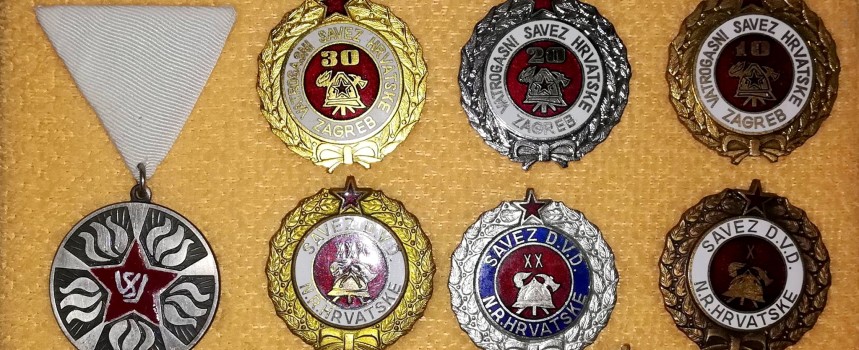
Nakon toga postrojili su se ispred Vatrogasnog doma i tačno u 12 sati zasvirali marš i krenuli prema spomeniku, zatim okrenuli prema kavani „Zadužbina" i dalje prema mostu na Ibru. Orkestar je paradnim korakom uz marš prošao pored njemačke straže na mostu, prešli most na Ibru i otišli u Ribnicu. Nijemcima nije bilo sumnjivo, niti jasno kuda odlazi vatrogasna muzika. Iz Ribnice se orkestar ubrzo prebacio na Goč i priključio odredu ,Jovo Kursula". Vatrogasni orkestar je , u znak sjećanja na ovaj povijesni datum kasnije promjenio naziv u „Orkestar 27. septembar", koje ime i danas sa ponosom nosi. Dana 1. ožujka 1953. Izvršni odbor Udruge donio je odluku da se hrabrost kraljevačke vatrogasne glazbe obilježava 27. rujna kao Dan vatrogasaca Srbije. Ubrzo se ovaj dan počeo slaviti kao dan vatrogasaca Jugoslavije. Tim povodom izrađene su prigodne značke u brončanoj, srebrnoj i zlatnoj verziji. Na vrhu značke piše 27-IX.1941., ispod toga nalazi se zastava Jugoslavije a od sredine do dna vatrogasna kaciga sa sjekiricom i bakljom te petokrakom crvene boje na kacigi. Sve to okruženo lovorovim vijencem.
The firefighters of Kraljevo have traditionally placed great importance on cultural and artistic activities alongside their regular duties. As early as 1931, a group of musicians playing wind instruments was formed, and together with the Sokol Orchestra in Kraljevo, they became the town’s first organized music ensemble. Over time, several military musicians who were stationed in Kraljevo joined the group. One of them was Branko Nasakanda, a military musician, who began working on the formation of a brass band within the Volunteer Fire Brigade. The conductor of the fire brigade’s band was Pavle Škurenko, who took over leadership of the orchestra in 1939. That same year, the band received its official name: “The Brass Band of the Volunteer Fire Brigade.” However, due to the lengthy name, locals commonly referred to it simply as the “fire brigade music.” When war broke out in 1941, the fire brigade band was composed of workers and school youth. The German military command placed all firefighters under the jurisdiction of the town’s command. To allow them to continue their duties, firefighters were issued movement permits even during the occupation. The orchestra continued operating under these new and difficult conditions. Using their movement passes—even during curfew—they managed to participate in numerous known and unknown resistance actions against the occupiers.
One of the most remarkable acts by the Kraljevo fire brigade band took place on September 27, 1941. On that day, the firefighters agreed to gather at a specific time in front of the firehouse at 8 Milan Toplica Street. Once assembled, they dressed in multiple layers of uniforms, burned the brigade’s archives, and disabled the telephone line. They then lined up in front of the firehouse, and precisely at noon, began to play a marching tune and proceeded toward the town’s monument. From there, they turned toward the “Zadužbina” café and continued on to the bridge over the Ibar River. Marching in formation and playing music, the band passed by the German guard at the bridge without raising suspicion, crossed the river, and went to the village of Ribnica. The Germans neither found their actions suspicious nor understood where the fire brigade band was going. From Ribnica, the band soon moved to the Goč mountain and joined the “Jovo Kursula” partisan unit. In memory of this historic day, the fire brigade band later changed its name to “The 27th of September Orchestra,” a name it proudly bears to this day. On March 1, 1953, the Executive Committee of the Association passed a resolution declaring September 27 the Day of Firefighters of Serbia, in honor of the courage shown by the Kraljevo fire brigade band. This date was soon adopted as the national Firefighters’ Day throughout Yugoslavia. On this occasion, commemorative badges were made in bronze, silver, and gold versions. At the top of the badge, the inscription reads "27-IX-1941." Below that is the flag of Yugoslavia, and from the middle to the bottom, there is a firefighter's helmet with an axe and torch, featuring a red five-pointed star on the helmet. The entire motif is surrounded by a laurel wreath.